





Night Vision Takes 30 Minutes to Build and Seconds to Lose

The evenings are getting dark earlier, and for a lot of pilots that means night flying season is back. Before you worry about lighting, circuits, or navigation, start with the one piece of equipment you cannot upgrade: your eyes.
Humans rely on vision for at least 80% of spatial awareness, and visual cues overpower every other sense you have. That is a strength by day and a liability at night, because the eyes you bring into the flight deck after dark do not work the way they work in daylight — and your body will happily fill the gaps with sensations that feel true and are not.
How your eyes actually work at night
Your retina has two kinds of light receptors. Cones sit in the centre of your vision and handle colour and detail. Rods handle peripheral vision, movement, and low light — and at night, rods do most of the work. That has a direct, practical consequence: to see something dim at night, do not stare straight at it. Look a few degrees to one side of it and let your peripheral vision pick it up.
Then there is the timing, and this is the number worth remembering. Full night adaptation takes about 30 minutes. Losing it takes seconds. One blast of white light — a bright ramp light, a phone screen, a dome light left on — and you are starting over. That is why the old habit of shutting one eye when you are about to be exposed to bright light still matters, and why you keep your interior lights as dim as you practically can while still reading your instruments and controls.
Two more things quietly eat into your night vision before you even leave the ground. Altitude degrades it noticeably above 5,000 feet ASL, and smoking degrades it too. Neither is fixable in the flight deck; both are reasons to plan for reduced vision rather than assume it will be there when you need it.
The illusions are the lesson
The black-hole effect is the big one: over dark terrain with few lights, you over-estimate your altitude and under-estimate distances, and you have no attitude reference unless you are on your instruments. Bright lights look closer than they are; dim lights look farther away. Cities look much closer than they really are. A line of city lights or cloud can present itself as a false horizon. Stars can be misread as ground lights — and if you chase them, you pitch the nose down toward nothing.
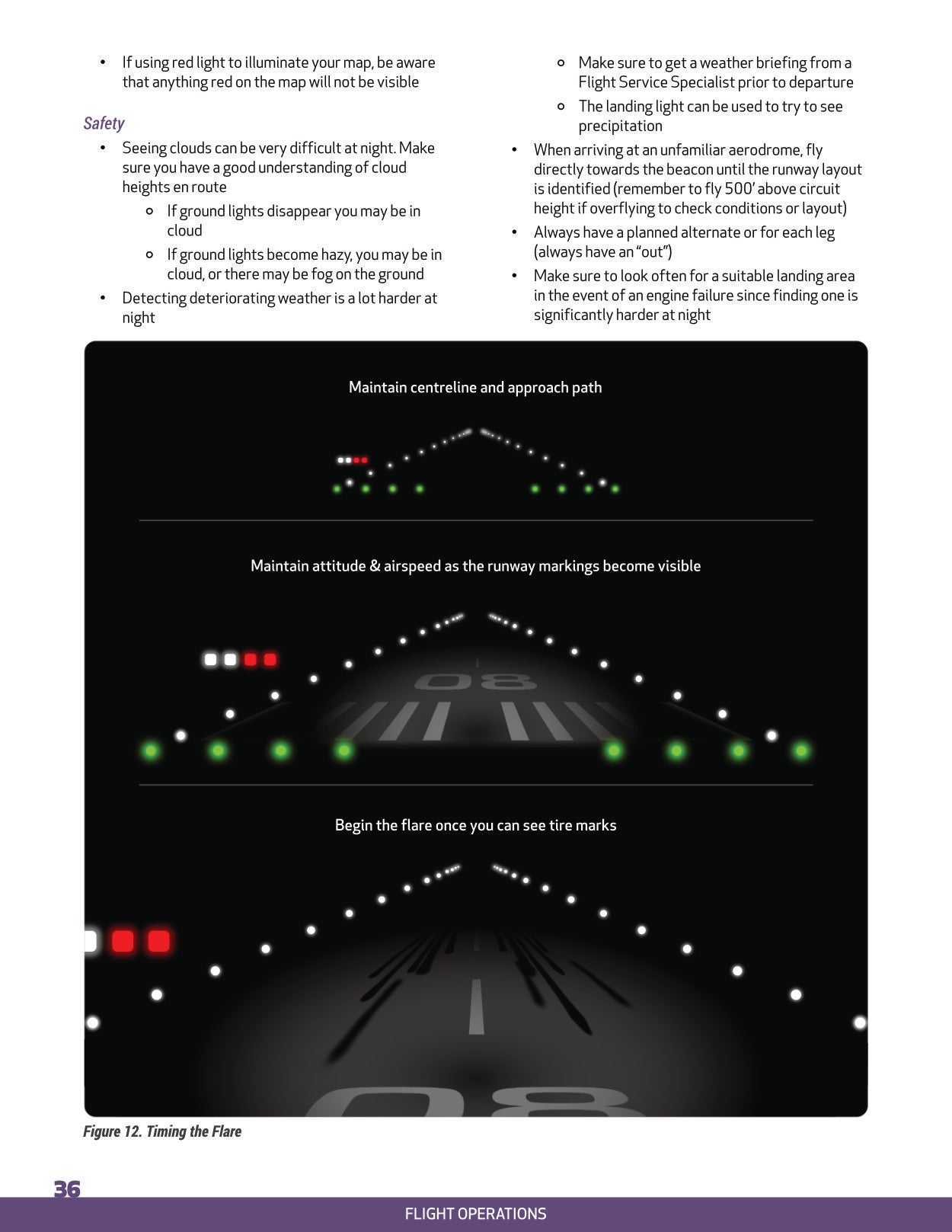
Runways play the same trick. An upslope runway looks too high, which tempts you into an approach that is too low; a downslope runway does the reverse. A wide runway looks low, so you fly too high; a narrow runway does the reverse. None of these illusions announce themselves. They just feel like a normal approach.
And your eyes have quieter failure modes too. With nothing to focus on, your eyes default to focusing about three to five feet ahead — empty-field myopia. Auto-kinesis: your eyes drift in and out of focus on a dim light. Visual filtering: your brain can simply ignore a stationary, same-sized airplane on the windshield — exactly the one you need to see.
Your body lies, too
Your vestibular system and your sense of physical forces will both try to tell you what the airplane is doing, and both are easy to fool when visual cues are weak.
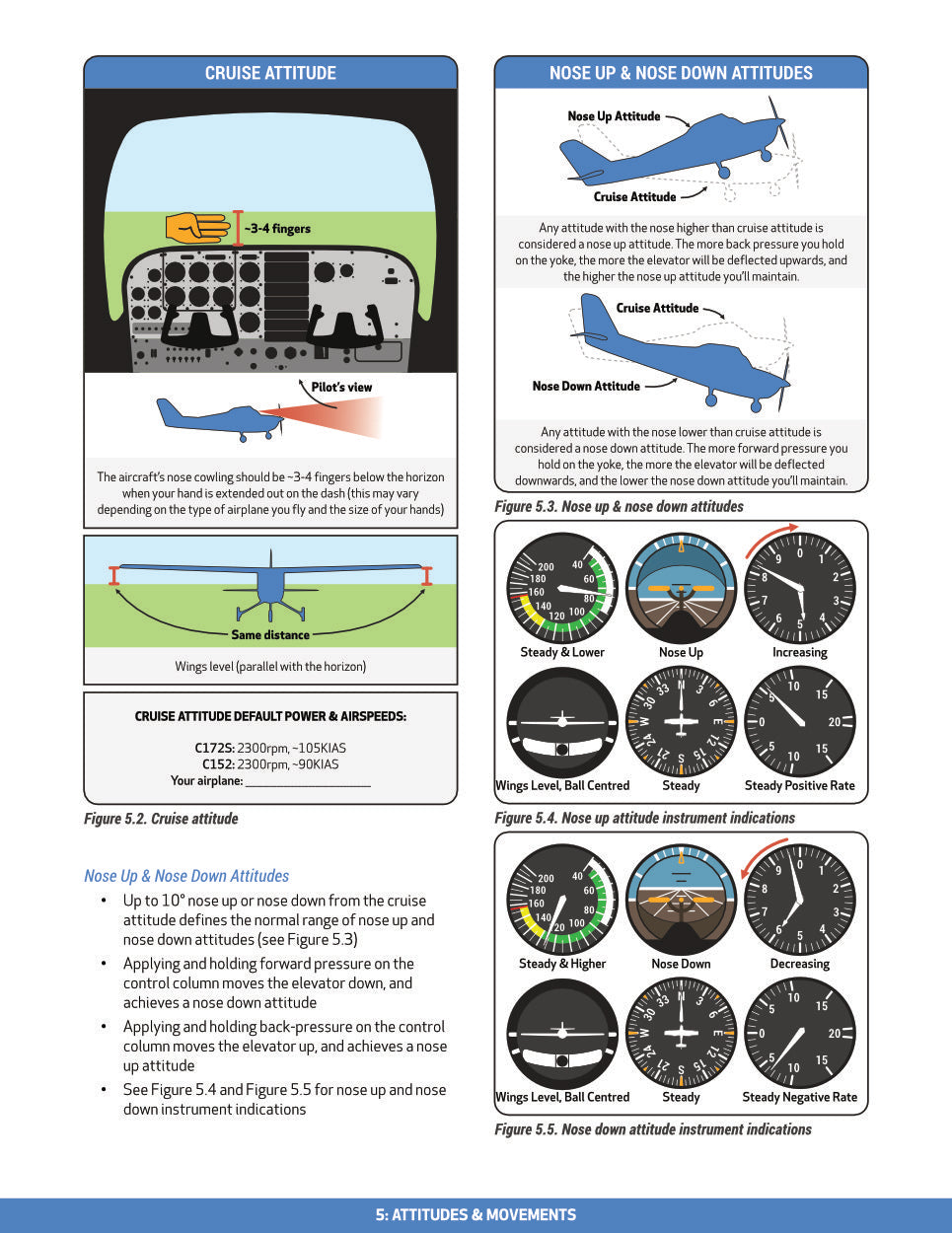
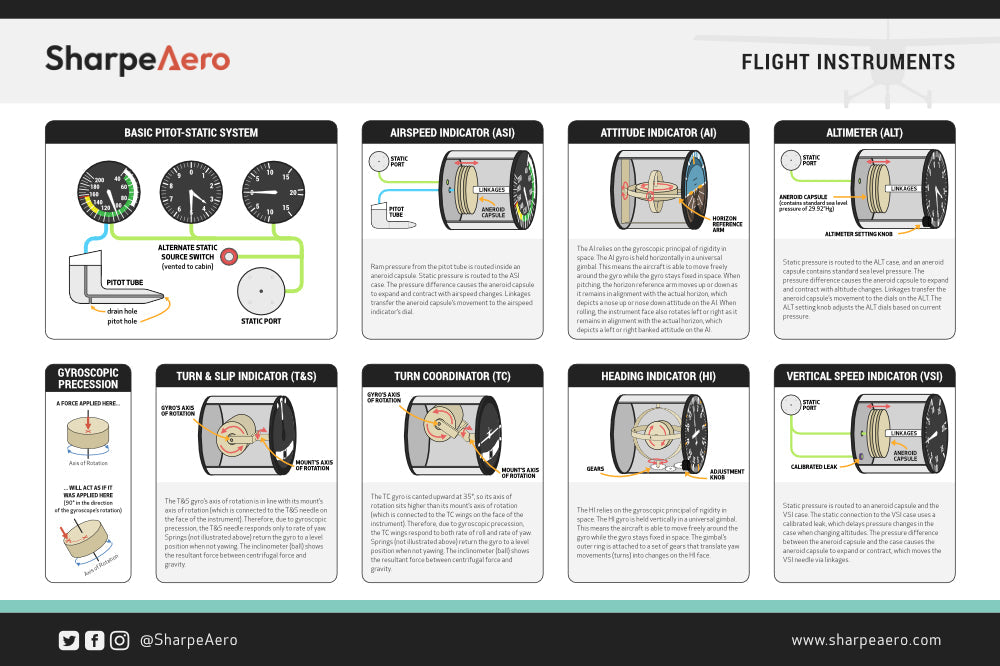
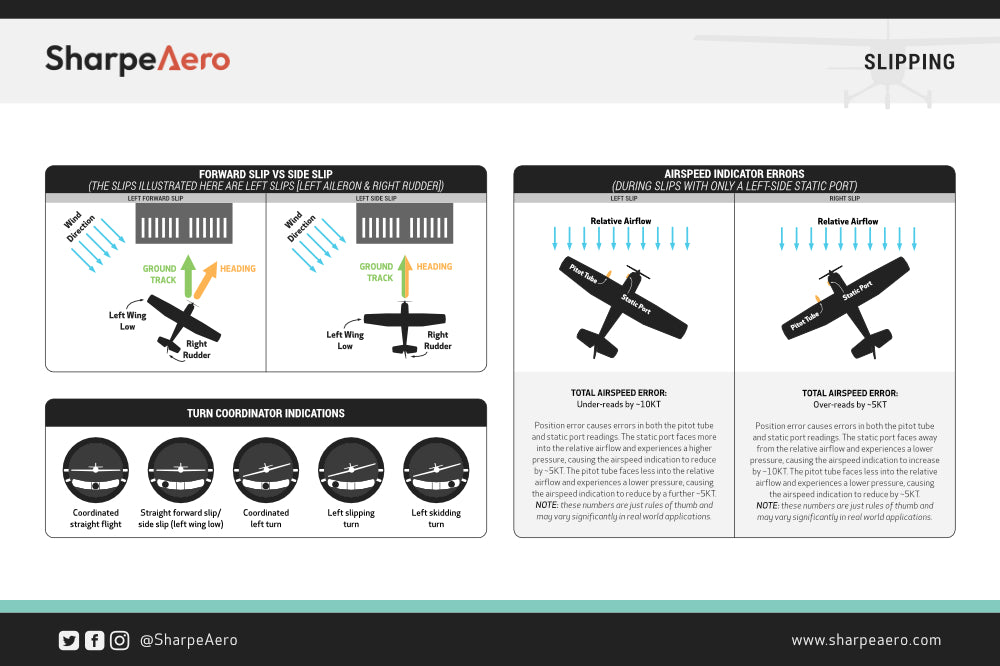
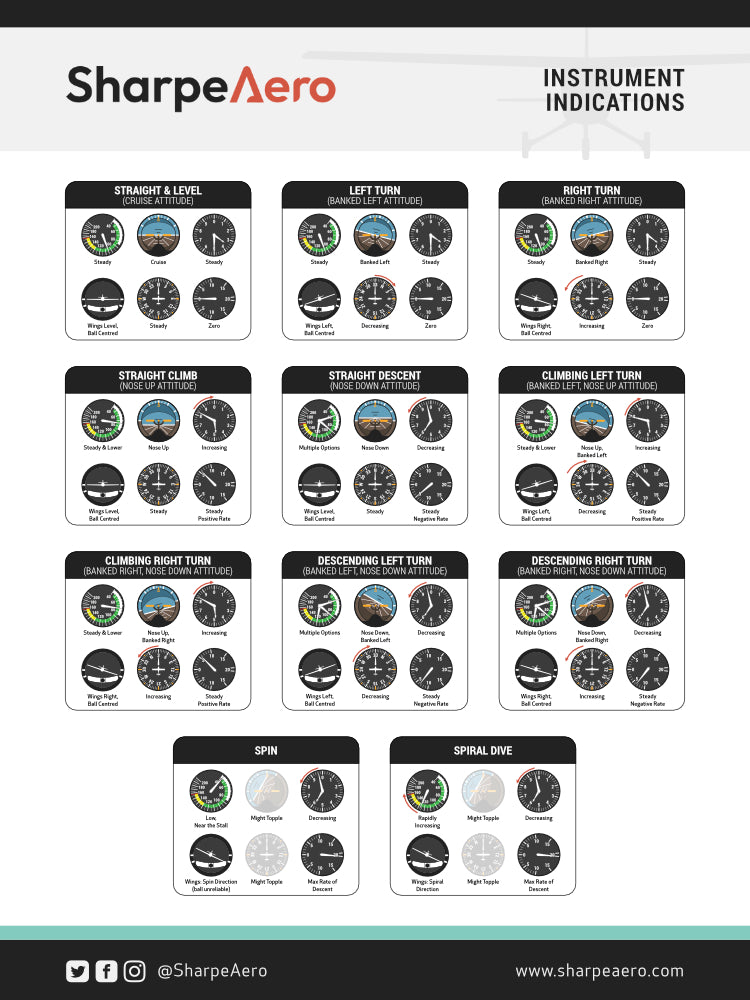
Acceleration feels like pitching up. Deceleration feels like pitching down. On climb-out at night, that acceleration illusion can tempt you to push the nose down inappropriately. Do not. Confirm what the airplane is doing with your vertical speed indicator and altimeter, and keep the airspeed your POH calls for.
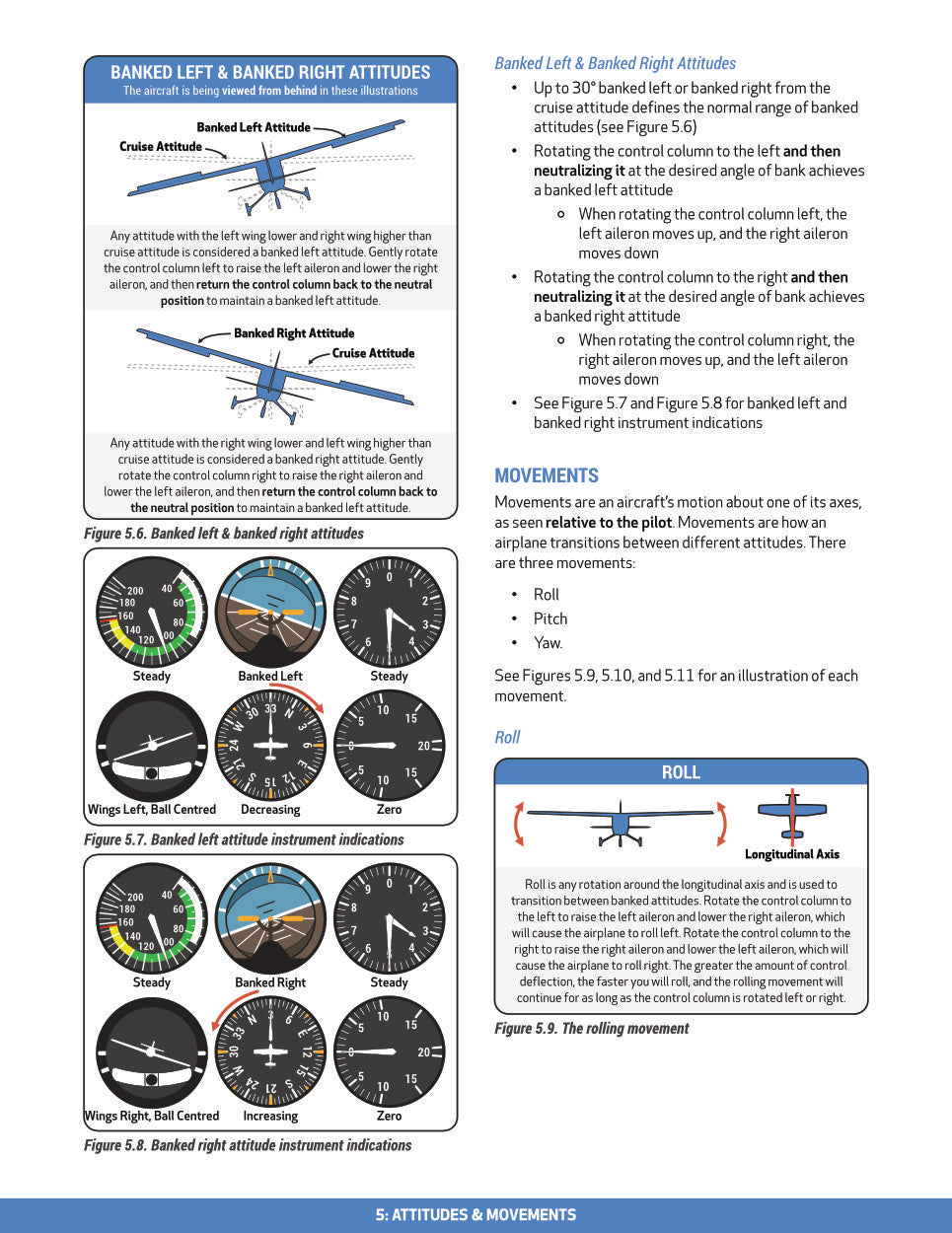
Then there are the leans. A turn slower than about three degrees per second is imperceptible, and after a prolonged turn, stopping can feel like turning the other way. Your body reports a turn that is not happening. The rule covering all of this is simple: trust your instruments over your body sensations, unless you have separate reason to believe the instruments are unserviceable.
Putting it together before you fly
None of this is a reason to avoid night flying. It is a reason to treat the first half hour as part of the flight: give your eyes their 30 minutes before you need them, protect them from bright light once adapted, keep the flight deck dim, look slightly off to the side for dim objects, and fly the instruments whenever your body and your eyes disagree — because at night, they will disagree more often than you expect.
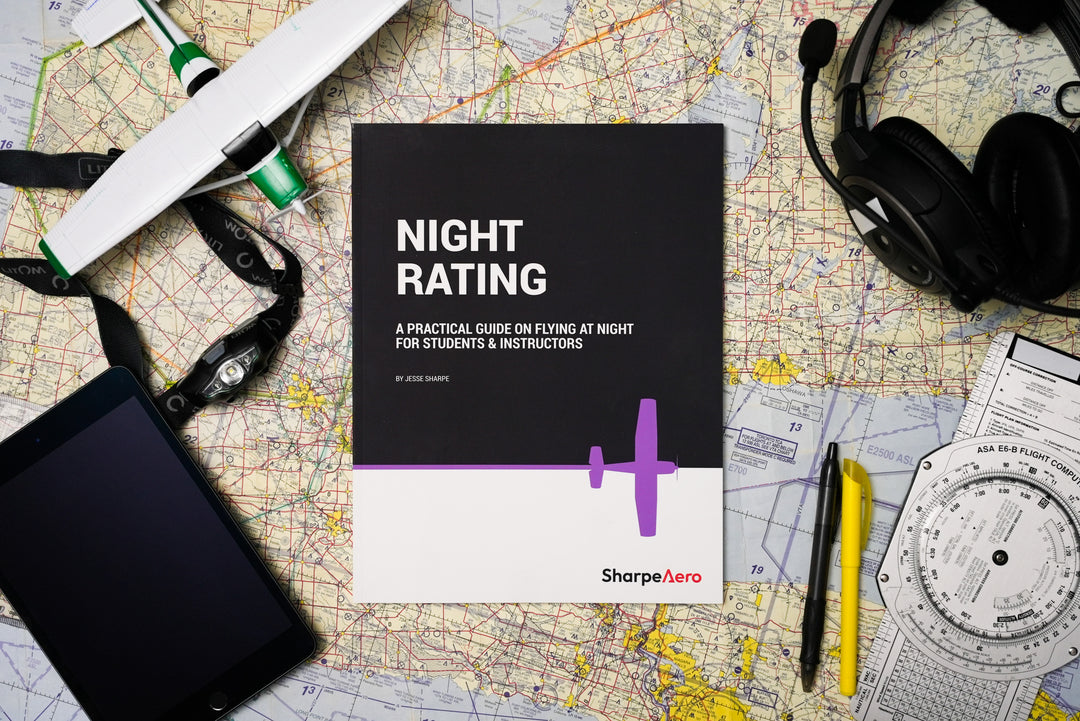
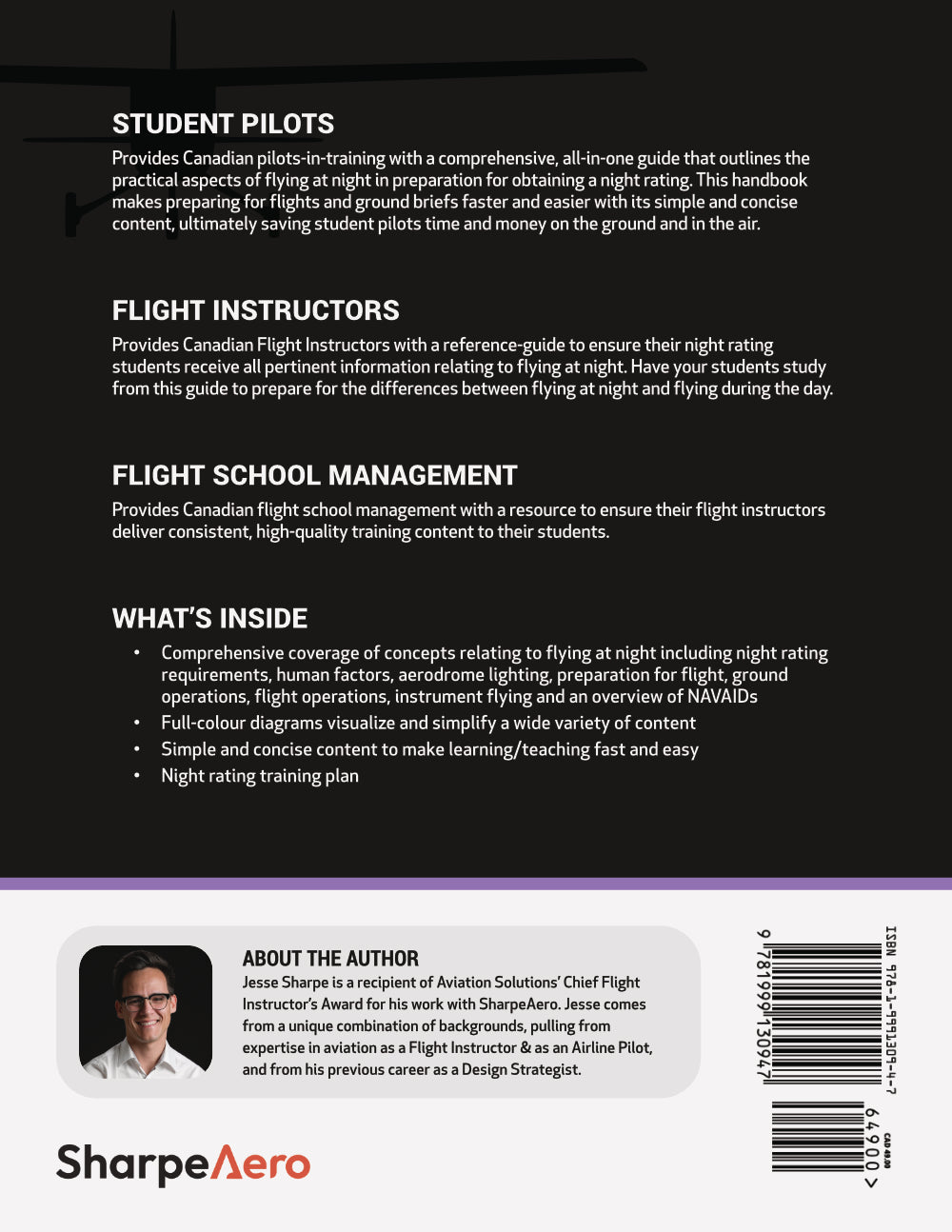
Here is how one reader describes the Night Rating book:
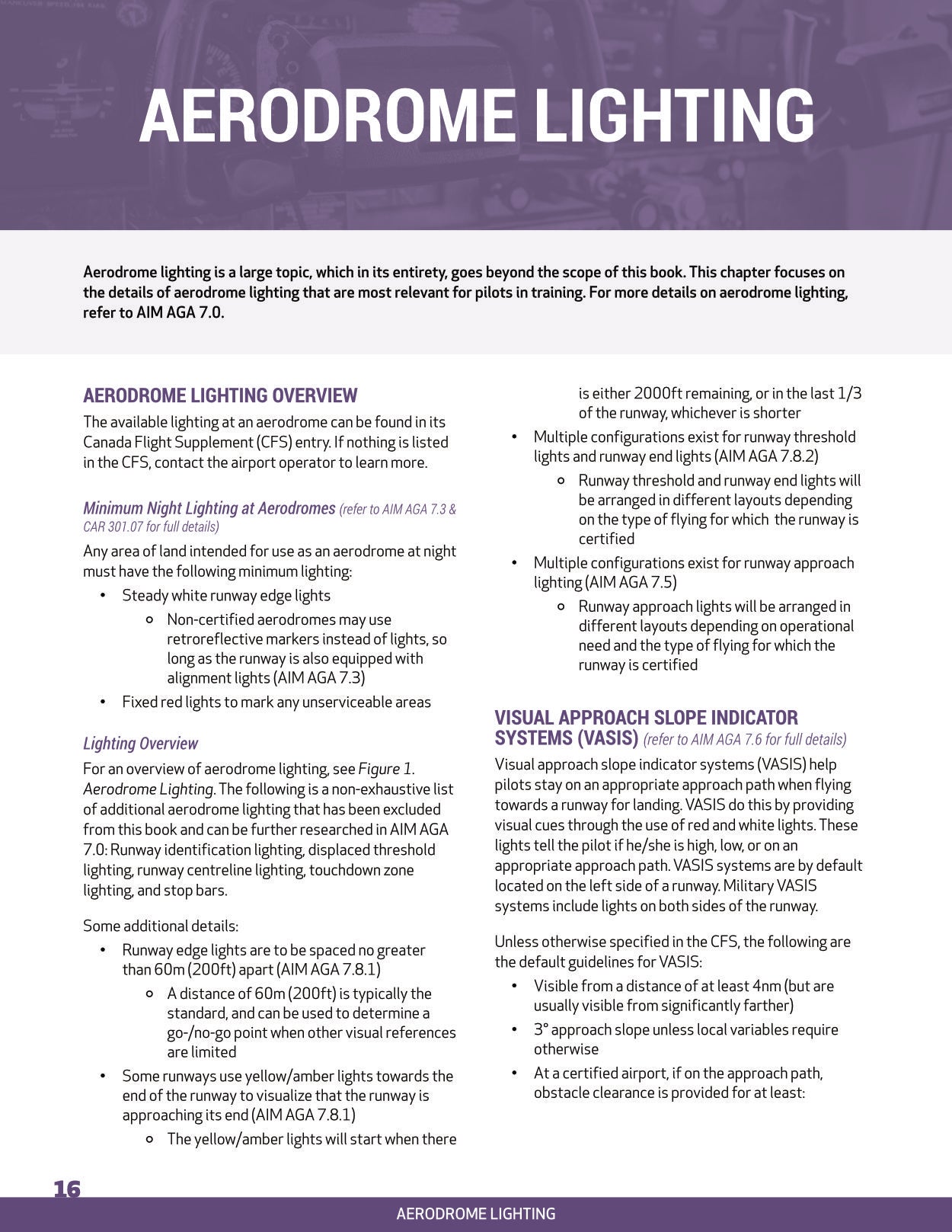
Excellent resource for learning about night flying in Canada, lots of great coverage of topics that will be important to any pilot pursuing their night rating. The visuals are helpful and the formatting makes for an easy read. I would highly recommend this book to anyone who is interested in pursuing a night rating in Canada.
— Tyler, verified review on sharpeaero.com
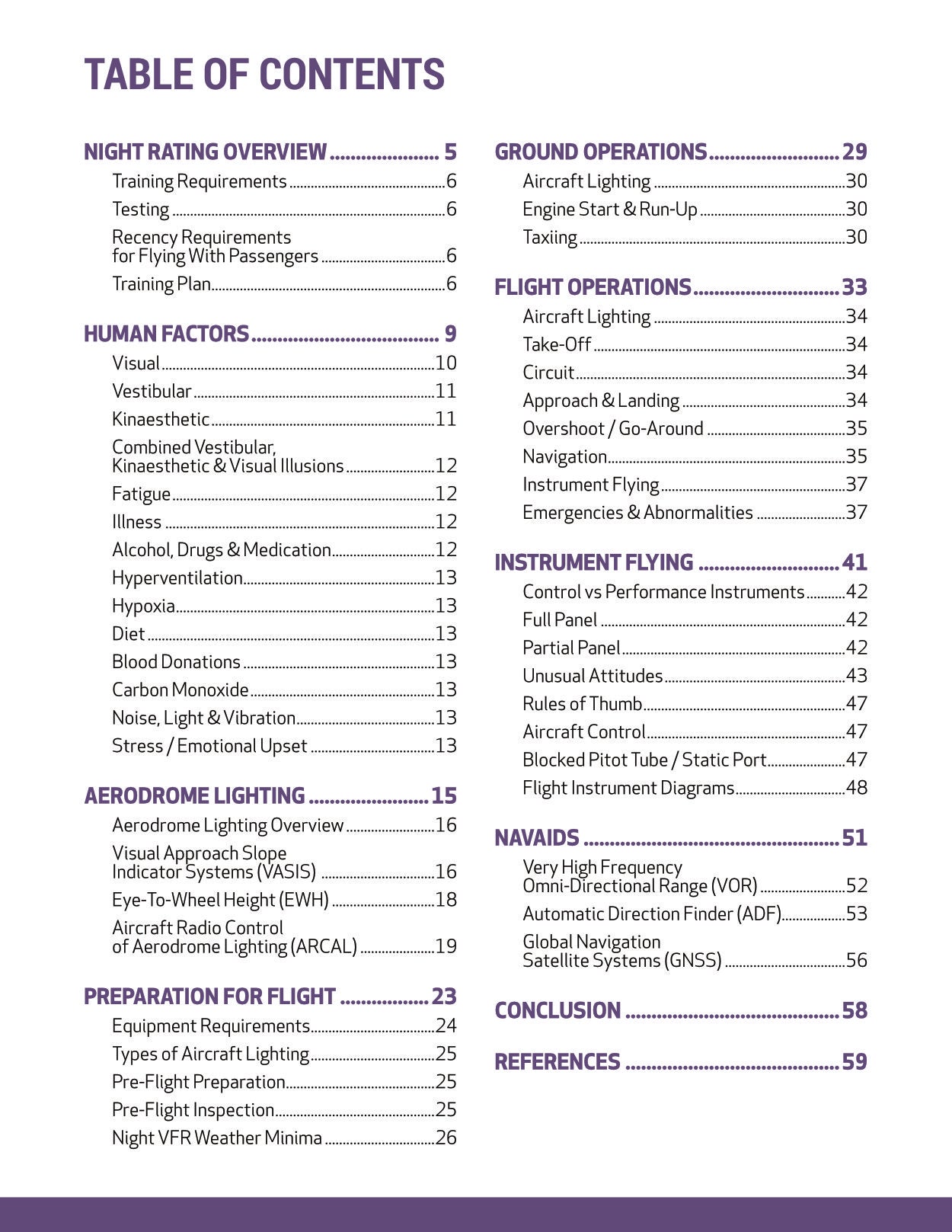
The full treatment — the eye anatomy, every illusion above, and the rest of the human-factors picture — is Chapter 2 (Human Factors) in Night Rating.
















Leave a comment